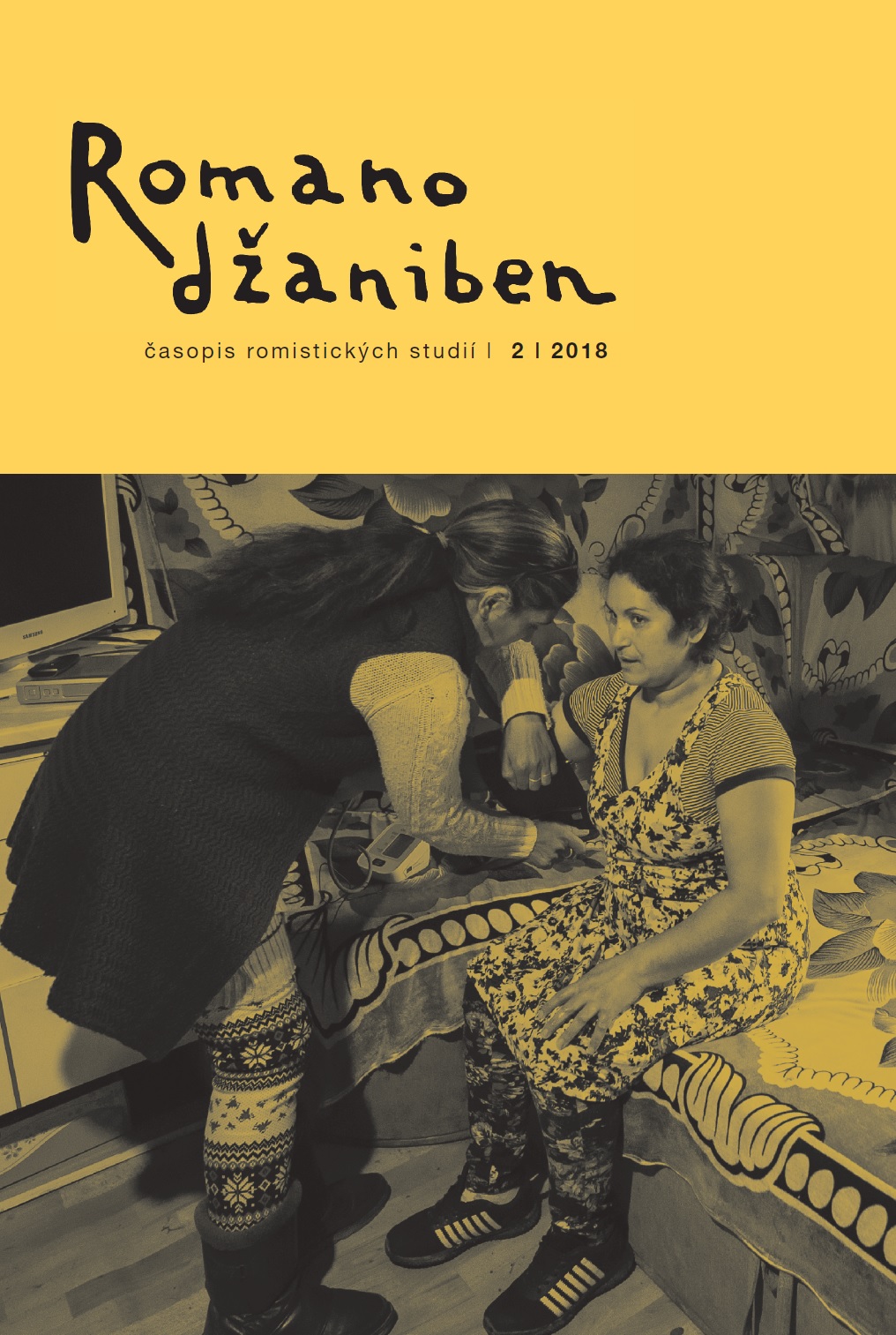
Participatívny prieskum o dojčení v marginalizovaných rómskych komunitách pre prax
DOI:
https://doi.org/10.5281/zenodo.10469384Klíčová slova:
Array, Array, Array, Array, Array, ArrayAbstrakt
Cílem této studie je představit data a informace z participativního průzkumu, který předcházel zavedení aktivit v oblasti zdravotní mediace v marginalizovaných romských komunitách a školení specializovaných laktačních poradkyň na podporu kojení v těchto komunitách. V rámci průzkumu kojení bylo zpracováno 1306 dotazníků z různých romských komunit na Slovensku a 787 dotazníků zaslaných prostřednictvím online formuláře od neromských žen, které využívají pomoc laktačních poradkyň. Článek nejen analyzuje výsledky těchto participativních průzkumů, ale také popisuje zkušenosti romských zdravotních mediátorů, kteří se podíleli na sběru dat ve svých lokalitách, a představuje využití výsledků v praxi.
Text ke stažení PDF
Reference
Aune, D., Norat, T., Romundstad, P., Vatten, L. J. 2014. Breastfeeding and the maternal risk of type 2 diabetes: A systematic review and dose–response meta-analysis of cohort studies. Nutrition, Metabolism and Cardiovascular Diseases 24 (2): 107–115.
Bojko, M., Hidas, S., Machlica, G., Smatana, M. 2018. Inklúzia Rómov je potrebná aj v zdravotníctve. Pohľad na výsledkové indikátory zdravia Rómov cez administratívne dáta. Bratislava: Inštitút finančnej politiky. Dostupné z: https://www.finance.gov.sk/sk/financie/institut-financnej-politiky/publikacieifp/komentare/komentare-z-roku-2018/23-inkluzia-romov-je-potrebna-ajzdravotnictve-december-2018.html [cit. 2019-03-15].
Brown, K. H., Stallings, R. Y., de Kanashiro, H. C., Lopez de Romaña, G., Black, R. E. 1990. Effects of common illnesses on infants' energy intakes from breast milk and other foods during longitudinal community-based studies in Huascar (Lima), Peru. The American Journal of Clinical Nutrition 52 (6): 1005–1013.
Dewey, K. G., Brown, K. H. 2003. Update on Technical Issues Concerning Complementary Feeding of Young Children in Developing Countries and Implications for Intervention Programs. Food Nutrition Bulletin 24 (1): 5–28.
Európska komisia. 2017. Health Equity Pilot Project: Case Study Romania - Protection of Breastfeeding for the Health of Infants and Young Children Especially in Vulnerable Families. Dostupné z: https://ec.europa.eu/health/sites/health/files/social_determinants/docs/hepp_case-studies_03_en.pdf [cit. 2018-10-23].
Exavery, A., Kanté, A. M., Hingora, A., Phillips, J. F. 2015. Determinants of early initiation of breastfeeding in rural Tanzania. International Breastfeeding Journal 10 (1): 27.
Grummer-Strawn, L. M., Mei, Z. 2004. Centers for Disease Control and Prevention Pediatric Nutrition Surveillance System. Does breastfeeding protect against pediatric overweight? Analysis of longitudinal data from the Centers for Disease Control and Prevention Pediatric Nutrition Surveillance System. Pediatrics 113 (2): e81-86. Dostupné z: http://www. ncbi.nlm.nih.gov/pubmed/14754976. [cit. 2018-07-26].
Haider, R., Ashworth, A., Kabir, I., Huttly, S. R. A. 2000. Effect of community‐ based peer counsellors on exclusive breastfeeding practices in Dhaka, Bangladesh: A randomised controlled trial. The Lancet 356 (9242): 1643–1647.
Harder, T., Bergmann, R., Kallischnigg, G., Plagemann, A. 2005. Duration of Breastfeeding and Risk of Overweight: A Meta-Analysis. American Journal of Epidemiology 162 (5): 397–403.
Chapman, D. J., Damio, G., Young, S., Pérez‐Escamilla, R. 2004. Effectiveness of breastfeeding peer counseling in a low‐income, predominantly Latina population: A randomized controlled trial. Archives of Pediatrics & Adolescent Medicine 158 (9): 897–902.
Chowdhury, R., Sinha, B., Sankar, M. J. et al. 2015. Breastfeeding and maternal health outcomes: a systematic review and metaanalysis. Acta Paediatrica 104 (S467): 96–113.
Kushwaha, K., Sankar, J., Sankar, M. J., Gupta, A., Dadhich, J. P., Gupta, Y. P., Sharma, B. 2014. Effect of peer counselling by mother support groups on infant and young child. PLoS One (9): e109181.
Morrow A.L. et al. 1999. Efficacy of home-based peer counselling to promote exclusive breastfeeding: a randomised controlled trial. Lancet 353 (9160): 1226–31.
Newman, J. 1990. Breastfeeding Problems Associated with the Early Introduction of Bottles and Pacifiers. Journal of Human Lactation (6): 59–63.
Newman, J. 1992. Establishing Breastfeeding: Starting off Right. Canadian Journal of Pediatrics (4): 55–60.
OECD. 2018. OECD Economic Surveys: Slovak Republic 2019. Paris: OECD Publishing. Dostupné z: https://doi.org/10.1787/eco_surveys-svk-2019-en [cit. 2019-03-15].
Paintal, K., Aguayo, V. M. 2016. Feeding practices for infants and young children during and after common illness. Evidence from South Asia. Maternal and Child Nutrition 12: 39–71.
Pochová, D., Timurová, M., Kovaľ, J. 2011. Vplyv dojčenia na zdravie detí. Prešov: Klinika pediatrie.
Prentice, A. M., Paul, A. A. 2000. Fat and energy needs of children in developing countries. The American Journal of Clinical Nutrition 72 (5): 1253–1265.
Rollins N. C. et. al. 2016. Why invest, and what it will take to improve breastfeeding practices? Lancet 387: 491–504.
Sankar, M. J., Sinha, B., Chowdhury, R. et al. 2015. Optimal breastfeeding practices and infant and child mortality: a systematic review and metaanalysis. Acta Paediatrica 104 (S467): 3–13.
Shakya, P., Kunieda, M. K., Koyama, M., Rai, S. S., Miyaguchi, M., Dhakal, S., Jimba, M. 2017. Effectiveness of community‐based peer support for mothers to improve their breastfeeding practices: A systematic review and meta‐analysis. PLoS One 12 (5): e0177434.
Sinha B. et al. 2015. Interventions to improve breastfeeding outcomes: systematic review and meta analysis. Acta Paediatrica (104): 114–34.
United Nations Children's Fund (UNICEF). 2016. The State of the World's Children 2016 – A fair chance for every child. New York: UNICEF. Dostupné z: https://www.unicef.org/publications/files/UNICEF_SOWC_2016.pdf [cit. 2019-03-08].
WHO. 2003. Global Strategy for Infant and Young Child Feeding. Geneva: WHO. Dostupné z: http://www.who.int/nutrition/publications/gs_infant_feeding_ text_eng.pdf. [cit. 2019-05-01].
WHO. 2014. Global targets 2025. To improve maternal, infant and young child nutrition. Geneva: WHO, dostupné z: http://www.who.int/nutrition/global-target-2025/en/ [cit. 2019-05-01].
WHO. 2015. The global strategy for women's, children's and adolescents' health (2016– 2030). Survive, thrive transform. Geneva: WHO. Dostupné z: http://www.who.int/life-course/partners/global-strategy/globalstrategyreport2016-2030-lowres.pdf [cit. 2019-05-12].
WHO. 2017. Guidance on ending the inappropriate promotion of foods for infants and young children. Geneva: WHO. Dostupné z: http://apps.who.int/gb/ebwha/pdf_files/WHA69/A69_7Add1-en.pdf?ua=1 [cit. 2018-10-23].
WHO. 2018. Guideline: counselling of women to improve breastfeeding practices. Geneva: WHO.
WHO, UNICEF. 2018. Protecting, promoting, and supporting breastfeeding in facilities providing maternity and newborn services: the revised Baby-friendly Hospital Initiative 2018. Dostupné z: https://www.who.int/nutrition/ publications/infantfeeding/bfhi-implementation/en/ [cit. 2019-05-03].