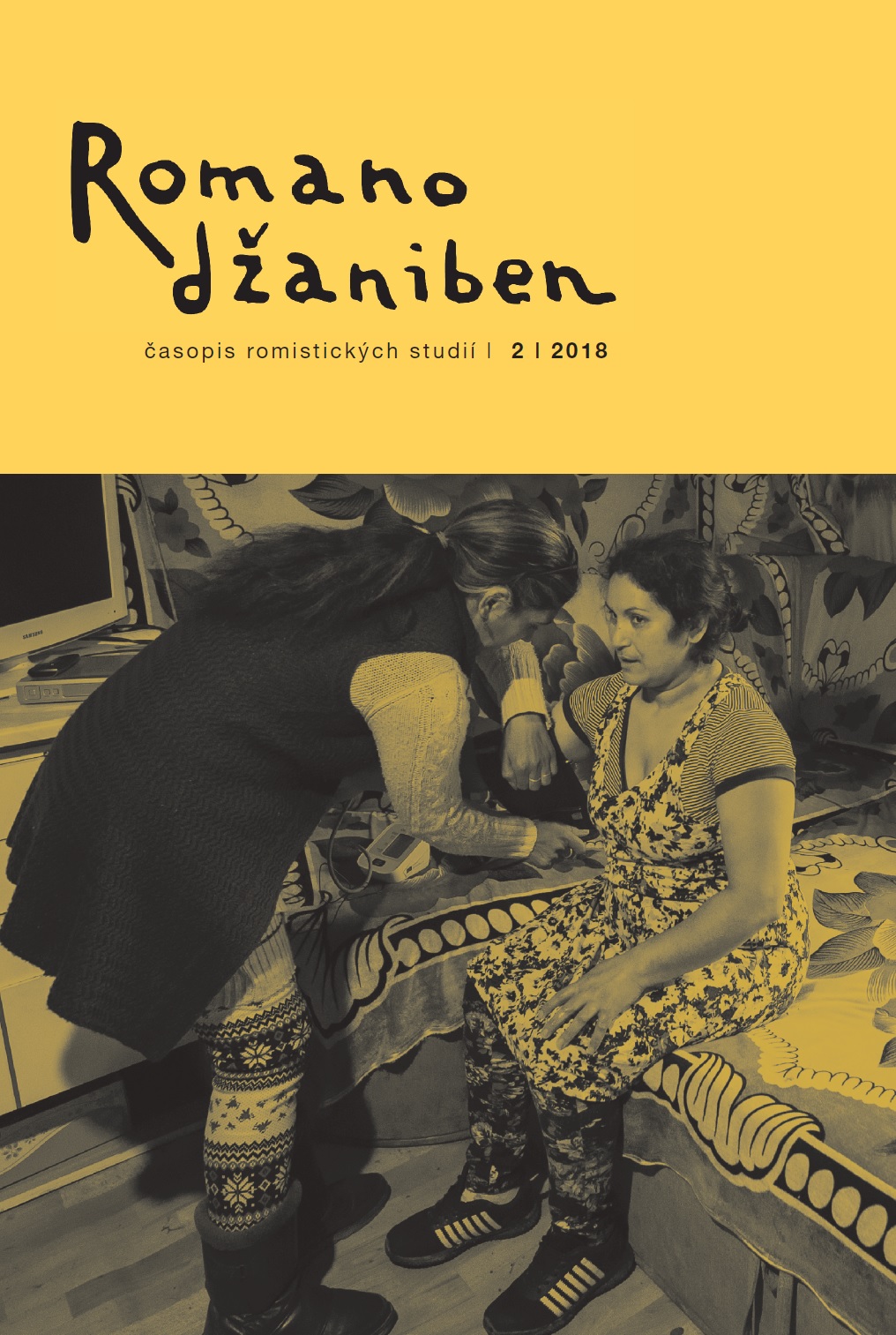
Qualitative analysis of narratives about private apparitions of the Virgin Mary in the Roma community as an example of polyphonic ethnography
DOI:
https://doi.org/10.5281/zenodo.10469290Abstract
The overall research dataset used for the purposes of this paper is part of ongoing research of the author on Roma folk beliefs (2006-2007), as well as on the activities of both traditional and non-traditional religious movements among the Roma in Slovakia (2003-2011). The study offers an in-depth qualitative analysis of a narrative on private Marian apparitions of one Romani woman living in a segregated Roma settlement in Šariš region, Eastern Slovakia, using the interpretative-phenomenological analysis (IPA, Smith et al. 2009). In order to offer the reader a holistic picture of research situation, the author uses not only the qualitative analysis and thematic coding, but also the perspective of multivocal ethnography (Tobin 1988; Clegg 2017). The interview is thus embedded in the synchronous context of field journal notes of the author, as well as in the diachronic context of her recent memories. The qualitative analysis also includes a wider context of the thematic search of media reports on local apparitions among Roma households in Eastern Slovakia. Based the Bachtin's concept of polyphony and dialogism, the author discusses also broader methodological point of the production of ethnological knowledge within synergic and creative triangulation of actors in terms of author -- informant -- reader.
Download text PDF
References
Bachtin, M. M. 1988. Estetika slovesnej tvorby. Bratislava: Tatran.
Begold, J., Thomas, S. 2012. Participatory Methods: A Methodological Approach. Forum: Qualitative Social Research 13 (1): art. 30.
Boyatzis, R. E. 1998. Transforming qualitative information. Thematic analysis and code development. Thousand Oaks, CA: Sage.
Braun, V., Clarke, V. 2006. Using thematic analysis in psychology. Qualitative Research in Psychology 3 (2): 77–101. – 2013. Successful Qualitative Research: A practical Gide for Beginners. London: Sage. – 2016. (Mis)conceptualising themes, thematic analysis, and other problems with Fugard and Potts´ sample-size tool for thematic analysis. International Journal of Social Research Methodology 19 (6): 739–743.
Clarke, V., Braun, V. 2013. Teaching thematic analysis: Overcoming challenges and developing strategies for effective learning. The Psychologist 26 (2): 120–123. – 2014. Thematic analysis. In: Teo, T. (ed.). Encyclopedia of critical psychology. New York, NY: Springer Science + Business Media, 1947–1952.
Clifford, J. 1983. On Ethnographic Authority. Representations 1 (2): 118–146.
Dwyer, K. 1982. Morroccan Dialogues. Baltimore: Johns Hopkins University Press.
Erdiaw-Kwasie, M. O., Acheampong, M. Y. 2018. Empowerment and community salience in multi-party collaboration: empirical lessons for development planning. Development in Practice 28 (7): 932–942.
Herzog, Ch., Handke, Ch., Hitters, E. 2019, v tlači. Analyzing Talk and Text II. Thematic Analysis. In: Van den Bulck, H., Puppis, M., Donders, K., Van Audenhove, L. (eds.). The Palgrave Handbook of Methods for Media Policy Research. Basingstoke: Palgrave Macmillan.
Hollway, W., Jefferson, T. 2000. Doing qualitative research differently. London: Sage.
Joffe, H., Yardley, L. 2004. Content and thematic analysis. In: Research methods for clinical and health psychology. London: SAGE publishing, 56–68.
Johnson, R. R. 1997. Audience involved: Toward a participatory model of writing. In: Computers and composition 14 (3): 361–376.
Krippendorff, K. 1980. Content analysis an introduction to its Methodology. London: SAGE publishing.
Mayring, P. 2010. Qualitative Inhaltsanalyse. In: Mey, G., Mruck, K. (eds.). Handbuch Qualitative Forschung in der Psychologie. Wiesbaden: VS Verlag, 601–613.
Mann, A. B. 1988. Obyčaje pri úmrtí u Cigánov-Rómov v troch spišských obciach. Slovenský národopis 36 (1): 192–202.
– 1993. Vartovanie pri mŕtvych u Rómov na Slovensku. In: Krekovič, E., Podolinská, T. (eds.) Kultové a sociálne aspekty pohrebného rítu od najstarších čias po súčasnosť. Bratislava, 81–88.
Podolinská, T. 2007. Čokoládová Mária – "rómske kresťanstvo" na Slovensku. Etnologické rozpravy 14 (1): 50–75. – 2009. Koho Boh? O kultúrnej aproximácii kresťanstva medzi Rómami na Slovensku. In: Grešková, L. (ed.). Pastorácia Rómov (Hľadanie rómskeho Boha). Bratislava: Ústav pre vzťahy štátu a cirkví, 73–110. – 2014. Whose Mary?: The Virgin Mary as an ethnic, cultural and religious marker among the Roma in Slovakia. In: Gebrochene Kontinuitäten: Transnationalität in den Erinnerungskulturen Ostmitteleuropas im 20. Jahrhundert. Köln: Böhlau Verlag, 146–165.
Saldaña, J. 2016. The Coding Manual for Qualitative Researchers. London: Sage Publication.
Schreier, M. 2014. Qualitative content analysis. In: Flick, U. (ed.). The Sage handbook of qualitative data analysis. London: Sage, 170–183.
Slocun, N. 2003. Participatory Methods Toolkit. King Baudorin Foundation, viWTA, UNU/CRIS. Dostupné z: www.kbs.frb.be [cit 2019-08-08].
Smith, J. A. (ed.). 2015. Qualitative Psychology: A Practical Guide to Research Methods. London: Sage.
Smith, J. A., Osborn, M. 2007. Pain as an assault on the self: An interpretative phenomenological analysis of the psychological impact of chronic back pain. Psychology and Health 22: 517–534.
Smith, J. A., Flowers, P., Larkin, M. 2009. Interpretative phenomenological analysis: theory, method and research. London: Sage.
Tobin, J. J. 1988. Visual anthropology and multivocal ethnography: A dialogical approach to Japanese preschool class size. Dialectical Anthropology 13 (2):173–187.
Voropaj, T. S. 2002. Človek vo svete slova: Michail Michajlovič Bachtin (1895–1975). Filozofia 57 (9): 651–666.
Zachar Podolinská, T. 2019a. Traces of the Virgin Mary in Post-Communist Europe. In: Zachar Podolinská, T. (ed.). Traces of the Virgin Mary in PostCommunist Europe. Bratislava: VEDA, IESA SAS, 16–55. – 2019b. 'From Periphery to the Centre': Private Apparition of the Virgin Mary (An In-depth Qualitative Analysis of the Apparition's Narrative with Field Journal Notes). In: Zachar Podolinská, T. (ed.). Traces of the Virgin Mary in Post-Communist Europe. Bratislava: VEDA, IESA SAS.