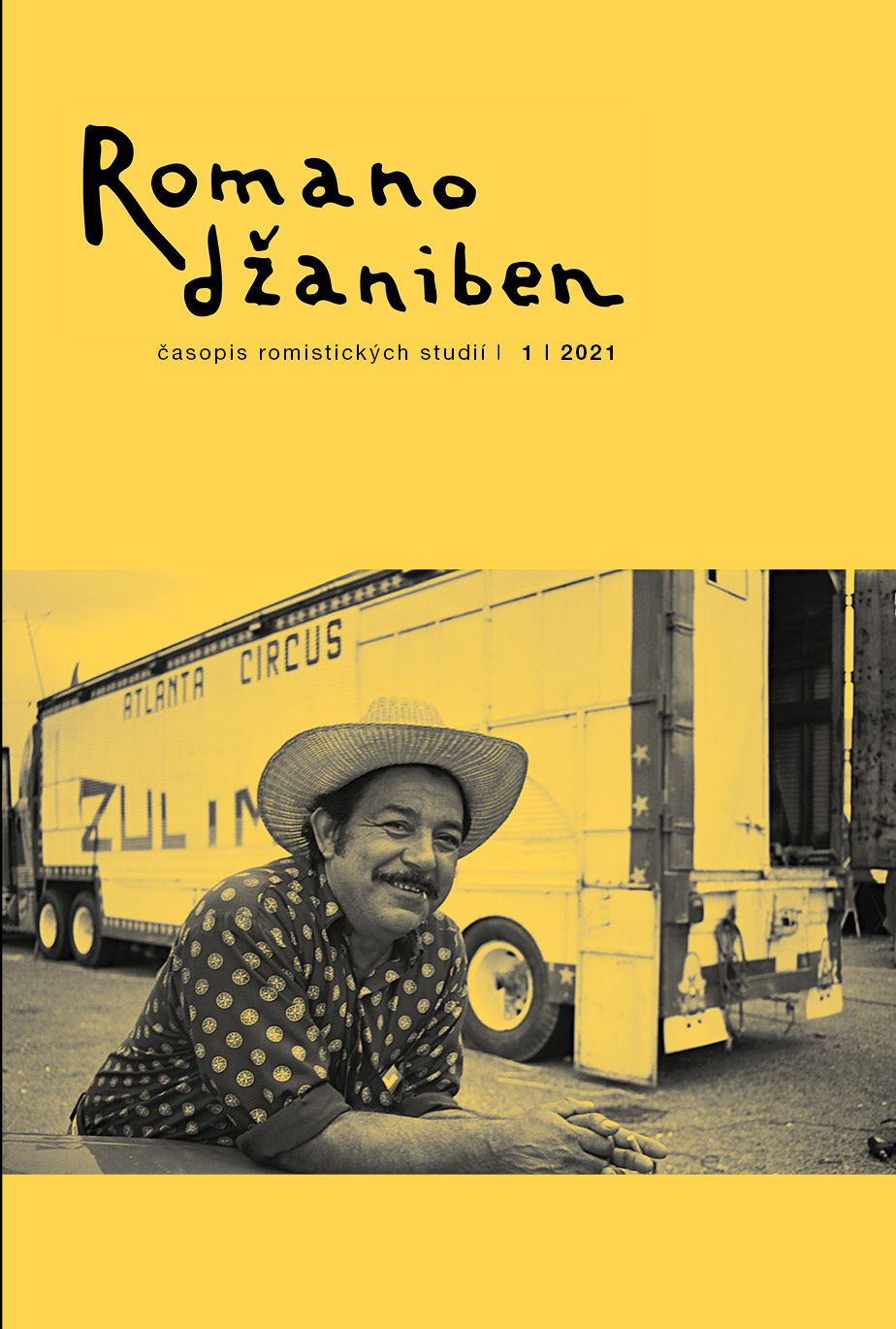
Romani Studies in Latin America and Caribbean: Perspectives and Challenges
Keywords:
Array, Array, Array, ArrayAbstract
The article attempts to fill the gap in knowledge about Roma in Latin America and the Caribean (LAC), offering an overview of the key issues related to the Romani populations in LAC and the variety of their groups, histories, denominations, statuses, recognition etc., including an overview of the state of the arts in Romani studies in LAC. The authors summarize the texts included in the thematic double issue of the Romano džaniben journal and the information from a questionnaire which they distributed among 57 Romani studies researchers in LAC. Based on these observations they they challenges the euro-centric view so far dominating the Romani studies as a discipline and argue for the neccessity of including the Transatlantic perspective.Download text PDF
References
Acuña Cabanzo, E. 2019a. Tracing the Romani Atlantic: An Ethnography of Translocal Interconnections and Mobilities among Romani Groups. Dizertační práce. Freiburg: Universität Freiburg, Philosophische Fakultät.
Acuña Cabanzo, E. 2019b. A Transatlantic Perspective on Romani Thoughts, Movements, and Presence beyond Europe. Critical Romani Studies 2 (1): 42–60.
Alvarado Solís, N. 2020. Nombrar y circular, gitanos entre Europa y las Américas. Innovación, creatividad y resistencia. San Luis Potosí: El Colegio de San Luis.
Avin, A. 2016. Migracje Cyganów do Nowego Świata. Studia Romologica 9 (1): 145–165.
Balsechi, E. D. 2005. Soy gitano, soy diferente: Je suis Gitan, je suis différent. Études tsiganes (23): 139–157.
Baroco, F., Lagunas, D. 2014. Another Otherness: The Case of the Roma in Mexico. In: Mácha, P., Gómez Pellón, J. E. (eds.). Masks of Identity: Representing and Performing Otherness in Latin America. Cambridge: Cambridge Scholars Publishing, 95–108.
Bernal, J. M. F. 1995. Sar kérdžili e lúmja. Romano džaniben 2 (4): 42–45.
Bernal, J. M. F. 1997. E paramiči le phure Romeski aj le terne Romeski / Pohádka o starém Romovi a mladém Romovi. Romano džaniben 4 (1): 16–20.
Bernal, J. M. F. 2002. E istorija murre poposki le Besanoski / Příběh o mém dědečkovi Besanovi. Romano džaniben 9 (3): 55–59.
Bernal, J. M. F. 2003. Polekra taj vica katar e Rrom Chorachane ande Sud Amerika / Původ a rody Romů Chorachane v Jižní Americe. Romano džaniben 10 (1): 133–140.
Bernal, J. M. F. 2005. O Joška aj o Sindžordži / Joška a svatý Jiří. Romano džaniben 12 (1): 65–67.
Bernal, J. M. F. 2007. Tři legendy o původu . Romano džaniben 14 (1): 159–162.
Campos, J. M. S. 2020. O nascimento da esposa: Movimento, casamento e gênero entre os calons mineiros. Dizertační práce. Belo Horizonte (MG): Universidade Federal de Minas Gerais, Programa de Pós-Graduação em Antropologia.
Carrizo-Reimann, A. 2011. Topografie der Vielfalt. Barrios gitanos in Buenos Aires. In: Jacobs T., Jacobs, F. (eds.). Vielheiten: Leipziger Studien zu Roma/ Zigeuner-Kulturen. Leipzig: Leipziger Universitätsverlag (Tsiganologie), 51–72.
Chakrabarty, D. 2009. Provincializing Europe. Princeton: Princeton University Press.
Cook-Martín, D., Fitzgerald, D. S. 2019. How Their Laws Affect our Laws. Mechanisms of Immigration Policy Diffusion in the Americas, 1790–2010. Law & Society Review 53 (1): 41–76.
Donovan, B. M. 1992. Changing Perceptions of Social Deviance: Gypsies in Early Modern Portugal and Brazil. Journal of Social History 26 (1): 33–53.
Ferrari, F. 2010. O mundo passa: Uma etnografia dos Calon e suas relações com os brasileiros. Dizertační práce. São Paulo: Universidade de São Paulo, Faculdade de Filosofia, Letras e Ciências Humanas.
Ferrari, F., Fotta, M. 2014. Brazilian Gypsiology: A view from anthropology. Romani Studies 24 (2): 111–137.
Fotta, M. 2018. From Itinerant Trade to Moneylending in the Era of Financial Inclusion: Households, Debts and Masculinity among Calon Gypsies of Northeast Brazil. New York: Palgrave Macmillan.
Fotta, M. 2020. The Figure of the Gypsy (Cigano) as a Signpost for Crises of the Social Hierarchy (Bahia, 1590s–1900s). International Review of Social History 65 (2): 315–341.
Floate, S., Alfaro, A. G., Lopes da Costa, E. M. 2000. Transportation and Deportation: The Expulsion of the Gypsies of England, Spain and Portugal. Hatfield: University of Hertfordshire Press.
Galleti, P. (ed.). 2021. Etnografiar lo Romani-Gitano. Experiencias de mismidad y otredad en el trabajo de campo hispanoamericano contemporáneo. Zvláštní číslo, Etnografías Contemporáneas 7 (12). Dostupné z: http://revistasacademicas.unsam.edu.ar/index.php/etnocontemp/issue/view/61.
Galletti, P. C. 2021b. Los Gitanos como otro y como horizonte de otredad en la Hispanoamérica colonial (s. XV a XIX). International Journal of Roma Studies 3 (2): 106–130.
Galletti, P. 2021c. Lo romaní-gitano en la órbita antropológica. Inicios y perspectivas en el campo de estudios hispanoamericanos. Etnografías Contemporáneas 7 (12): 80–92.
Goebel, M. 2016. Immigration and National Identity in Latin America, 1870–1930. Oxford Research Encyclopedia of Latin American History. Dostupné z: https://oxfordre.com/latinamericanhistory/view/10.1093/acrefore/9780199366439.001.0001/acrefore-9780199366439-e-288 [cit. 22. 6. 2021].
Hancock, I. F. 1982. The Fate of Gypsy Slaves in the West Indies. Journal of the Gypsy Lore Society 2 (1): 75–80.
Jamrichová, K. 2015. Variácie identifikácií v rómskej komunite z mexickej Guadalajary. Romano džaniben 22 (1): 9–34.
Jiménez, R. B. 2021a. Reminiscencia española o sentimiento argentino en los gitanos caló de Buenos Aires: Aproximación etnográfica a la relación entre transformación identitaria y residencia en el espacio. Etnografías Contemporáneas 7 (12): 118–132.
Jiménez, R. B. 2021b. La Inmigración Gitana “Oficial” a la Argentina a través del Caso de Migrantes Rom por Vía Marítima entre 1911 y 1947. International Journal of Roma Studies 3 (3): 216–242.
Lagunas, D. 2019. After Barth: the Mexican Calós‘s lived identity. Anthropological Notebooks 25 (1): 133–150.
Lagunas, D. 2018. The Spanish Gitanos of Mexico City: Rhythmicity, Mimesis and Domestication of the Payos. Annuaire Roumain d‘ Anthropologie (55): 125–140.
Lignier, A. I. 2012. L‘Odyssée méconnue des Tsiganes en Amérique latine. Études tsiganes (3): 8–23.
Monteiro, E. D. N. J. 2019. Tempo, redes e relações: Uma etnografia sobre infância e educação entre os Calon. Dizertační práce. Florianópolis: Universidade Federal de Santa Catarina, Centro de Filosofia e Ciências Humanas, Programa de Pós-Graduação em Antropologia Social.
Mirga-Kruszelnicka, A. (v tisku, vyjde 2022). Mobilizing Roma Ethnicity: Romani Political Activism in Argentina, Colombia and Spain. Budapest: CEU Press.
Padure, C., De Pascale, S., Adamou, E. 2018. Variation between the copula si „to be“ and the I-clitics in Romani spoken in Mexico. Romani Studies 28 (2): 263–292.
Pardo-Figueroa Thays, C. 2013. Gitanos en Lima: Historia, cultura e imágenes de los rom, los ludar y los calé peruanos. Lima: Pontificia Universidad Católica del Perú, Instituto Riva-Agüero.
Pudliszak, A. 2010. Gypsyness at stake. Identity politics in Buenos Aires. Tsiganologische Mitteilungen, zvláštní číslo (Netzwerken III, Leipzig, 23.–25. 4. 2010): 2–10.
Pudliszak, A. 2012. The dangerous strangers. Gypsies, pimps & anarchists in the formation of modern Argentina. RAI 2012: Anthropology in the World. Royal Anthropological Institute / British Museum Centre for Anthropology. London, 9. 6. 2012.
Ripka, Š. 2008. Romský letniční sbor v Kánchi, Mexiko. Romano džaniben 15 (3): 71–97.
Salamanca, G. 2005. Vitalidad lingüística y cultural en un mundo globalizado: El caso del rromané, frente a las lenguas vernáculas chilenas. Sociedad Hoy (8–9): 107–116.
Salinas, N. 1988. Religiosidad entre los Rom. Montenegrinos de Uruguay. La Palabra y el Hombre (68): 108–114.
Santos, B. S. 2002. Between Prospero and Caliban: Colonialism, Postcolonialism, and Inter-Identity. Luso-Brazilian Review 39 (2): 9–43.
Silva Mello, M. A., Berocan Veiga, F. 2008. Os Ciganos e as Políticas de Reconhecimento: Desafios Contemporâneos. In: Associação Brasileira de Antropologia – ABA, Artigos e Textos. Dostupné z: http://www.portal.abant.org.br/artigos-e-textos/ [cit. 22. 9. 2021].
Sorescu-Marinković, A., Kahl, T., Sikimić, B. (eds.). 2021. Boyash Studies: Researching “Our People”. Berlin: Frank & Timme.
Sutre, A. 2014. “They give a history of wandering over the world”. A Romani clan‘s transnational movement in the early 20th century. Quaderni storici 49 (2): 471–498.
Torbágyi, P. 2003. Gitanos húngaros en América Latina. Acta Hispanica (8): 139–144.
Trevisan, P. 2020. Austrian “Gypsies” in the Italian archives: Historical ethnography on multiple border crossings at the beginning of the twentieth century. Focaal – Journal of Global and Historical Anthropology (86): 61–74.
Vilar, M. 2020. Calon-Welten: Eine Ethnografie über das Leben, Sterben und Weiterleben bei Ciganos in Brasilien. Bielefeld: Transcript-Verlag.