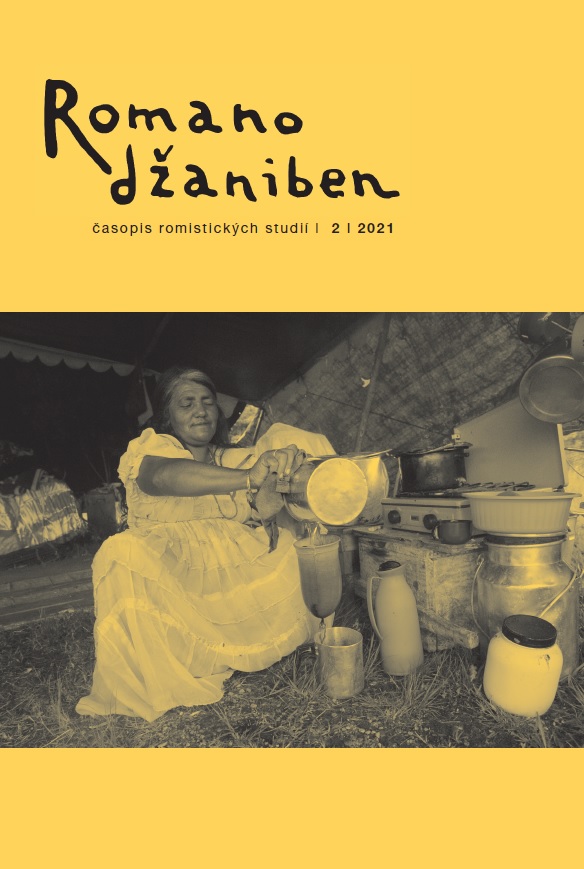
Negotiating Visibility and Invisibility among Romani families in Bogota, Colombia
DOI:
https://doi.org/10.5281/zenodo.10405040Keywords:
Array, Array, Array, Array, ArrayAbstract
The article explores how visibility and invisibility have shaped the lives of Romani (Rrom) people in Bogota, Colombia. Through an ethnographic perspective, it presents vignettes of daily life and extraordinary events that are part of Romani experiences in the city and resulted from twelve years of accumulated fieldwork experiences. It relies on these descriptions to problematize simplistic understandings of the visible/invisible conceptual pairing, weaving them instead as negotiated strategies tied to quotidian interactions, specific historical moments and local contexts. The text proposes a timeline of three distinct episodes in the relations of Roma with non-Roma (gadye), including (i) a period of "passing" strategies; (ii) a period of mediated visibility as negotiations with the Colombian state took place; and a (iii) contemporary moment where families have begun to understand the limitations of an ethnic recognition process.Download text PDF
References
Acuña Cabanzo, E. 2008. Lo „gitano“. Estereotipos y etnicidad alrededor del 8 de abril, Día Internacional del Pueblo Rom, en Bogotá, Colombia. Bogota: Universidad Nacional de Colombia, Facultad de Ciencias Humanas, Departamento de Antropología.
Acuña Cabanzo, E. 2011. Between „flying away“ and „being warriors“. The Construction of Ethnic Identity among Rrom (Gypsies) in Bogotá, Colombia. Leiden: Leiden University, Social and Behavioral Sciences, Anthropology.
Acuña Cabanzo, E. 2019. Tracing the Romani Atlantic. An Ethnography of Translocal Interconnections and Mobilities among Romani Groups. Dizertační práce. Freiburg: University of Freiburg, Institute for Cultural Anthropology and European Ethnology.
Acuña Cabanzo, E. 2020. Roma in Colombia: Arrivals, lives and political organization. Project Education of Roma Children in Europe – Council of Europe. Strasbourg (Factsheets on Roma, 3.17). Dostupné z: http://romafacts.uni-graz.at/view_pdf.php?t=culture&s=c_3_17&l=en
Acuña Cabanzo, E. 2021. „Lo gitano“ y lo Rrom: Representaciones, estereotipos, y performatividad en el proceso de reivindicación étnica romaní en Colombia. Etnografías Contemporáneas 7 (12): 134–157.
Brazzabeni, M., Cunha, M. I., Fotta, M. 2016. Introduction: Gypsy Economy. In: Brazzabeni, M., Cunha, I. M., Fotta, M. (eds.). Gypsy Economy: Romani Livelihoods and Notions of Worth in the 21st Century. New York: Berghahn Books, 1–29.
Brubaker, R. 2004. Ethnicity without Groups. Cambridge: Harvard University Press.
Dornhof, S. 2011. Regimes of Visibility. Representing violence against women in the French banlieue. Fem Rev 98 (1): 110–127.
Eriksen, T. H. 1999. Ethnicity and Nationalism. Anthropological Perspectives. London: Pluto Press.
Galeano, H. 1997. Tiempo de Gitanas. Vanguardia Liberal. 27. 12. 1997.
Gómez Fuentes, V., Gamboa Martínez, J., Paternina Espinosa, H. A. 2000. Los Rom de Colombia. Itinerario de un Pueblo Invisible. Bogota: Prorrom.
Horváth, K. 2005. Gypsy work—gadjo work. Romani Studies 15 (1): 31–49.
Lee, K. 2000 Orientalism and Gypsylorism. Social Analysis 44 (2): 129–156.
Lemon, A. 2000. Between Two Fires. Gypsy Performance and Romani Memory from Pushkin to Post-Socialism. Durham: Duke University Press.
Marsh, A. 2008. “No promised land”: History, Historiography & The Origin of the Gypsies. London: University of Greenwich London, Sociology Department.
Mirga-Kruszelnicka, A. 2016. “The associations are all we have”: Comparative Study of the Romani Associationism and Ethnic Mobilization in Spain and Colombia. Dizertační práce. Barcelona: Universitat Autónoma de Barcelona, Department of Social and Cultural Anthropology.
Moreo, E. 2012. On Visibility and Invisibility: Migrant Practices between Regimes of Representation and Self-Determination. In: Lentin, R., Moreo, E. (eds.). Migrant Activism and Integration from Below in Ireland. London: Palgrave Macmillan, 72–93.
Mubi Brighenti, A. 2010. Visibility in Social Theory and Social Research. Basingstoke: Palgrave Macmillan.
Okely, J. 1983. The Traveller-Gypsies. Cambridge: Cambridge University Press.
Okely, J. 2014. Recycled (mis)representations. Gypsies, Travellers or Roma treated as objects, rarely subjects. People, Place and Policy 8 (1): 65–85.
Paternina Espinosa, H. A. 2013. El Proceso Organizativo del Pueblo Rrom (Gitano) de Colombia (PRORROM). De la Auto-invisibilidad como estrategia de resistencia étnica y cultural, a la visibilización como mecanismo de reconicimiento de derechos económicos, sociales, políticos y culturales. Madrid: Universidad Autónoma de Madrid, Departamento de Antropología Social y Pensamiento Filosófico Español.
Prorom. 2005. Tras el Rastro de Melquíades. Memoria y Resistencia de los Rom de Colombia. Bogotá: Prorom (O Lasho Drom).
Prorrom. 2008. Le Paramici le Romege kay besen Akana ando o Bogotá. Fortalecimiento y recuperación de la tradición oral de la kumpania de Bogotá a través de cuentos, mitos, leyendas y música. Bogotá: Prorrom.
Silverman, C. 1982. Everyday Drama. Impression Management of Urban Gypsies. Urban Anthropology 11 (3/4): 377–398.
Silverman, C. 1988. Negotiating „Gypsiness“. Strategy in Context. The Journal of American Folklore 101 (401): 261–275.
Stewart, M. 1997. The Time of the Gypsies. Cumnor Hilt, Oxford: Westview Press.
Stewart, M. 2013. Roma and Gypsy „Ethnicity“ as a Subject of Anthropological Inquiry. Annual Review of Anthropology 42: 415–432.
Thompson, J. B. 2005. The New Visibility. Theory, Culture and Society 22 (6): 31–51.
Trumpener, K. 1992. The Time of the Gypsies. A „People without History“ in the Narratives of the West. Critical Inquiry 18 (4): 843–884.
Williams, P. The Invisibility of the Kalderash of Paris. Some Aspects of the Economic Activity and Settelment Patterns of the Kalderash Rom of the Paris Suburbs. Urban Anthropology 11 (3/4): 315–346.